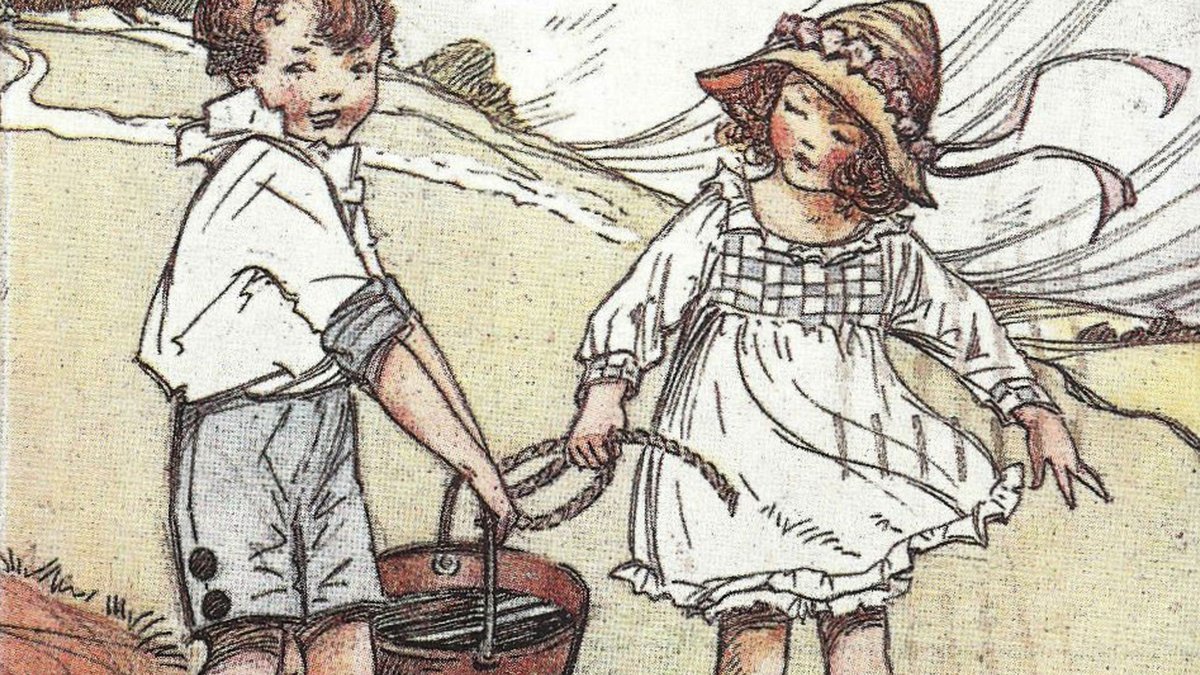
You know the tune, you've sung the words, and chances are, you've pictured the scene: two children, a hill, a pail, and an unfortunate tumble. "Jack and Jill went up the hill" is one of the most ingrained nursery rhymes in the English-speaking world, a deceptively simple jingle that often sparks a smile. But beneath its catchy rhythm lies a rich tapestry of history, cultural shifts, and often surprisingly dark interpretations. When we talk about the Meaning and Symbolism in Jack and Jill, we’re not just dissecting a children's song; we're peeling back layers of centuries-old societal anxieties, historical events, and enduring human truths.
This isn't just a guide to the rhyme; it's an invitation to explore how simple verses can carry profound cultural weight, evolving from a cautionary tale to an allegory for life itself. Let's delve into the hidden depths of this iconic story.
At a Glance: What Jack and Jill Might Really Mean
- Ancient Origins: The rhyme dates back to the 1700s, initially as "Jack and Gill," possibly referring to two boys, later evolving to include a girl.
- More Than a Simple Fall: The "well at the top of the hill" is a key clue, suggesting the literal narrative is a metaphor for something deeper.
- Diverse Interpretations: Theories range from historical events (beer taxation, specific tragedies) to broader philosophical concepts (cautionary tales, social commentary).
- The Most Accepted Profound Meaning: Many scholars believe it symbolizes the cycle of life and death, reflecting that "what goes up must come down."
- Cultural Resilience: The rhyme's adaptability allows it to resonate across generations, its symbolism shifting and deepening with time.
The Rhyme's Enduring Whisper: More Than Just a Nursery Tune
For many, "Jack and Jill" is just background noise from childhood, a pleasant jingle without much thought. But like so many traditional tales, its simplicity masks a fascinating journey through history and a surprising array of symbolic possibilities. It’s a prime example of how folk literature often carries the echoes of a distant past, inviting us to look beyond the surface.
A Brief History: From Jack and Gill to Jack and Jill
Our journey begins in the 18th century, with the earliest known version appearing in John Newbery’s Mother Goose’s Melody, believed to be published around 1765 in London. Intriguingly, it wasn't always "Jack and Jill." The initial spelling was "Jack and Gill," and historical illustrations from that period sometimes even depicted two male figures. The shift to "Jill" likely happened for a combination of reasons: improved alliteration, making the rhyme flow more smoothly, and the natural evolution towards gender diversity in the characters.
The original printing was remarkably succinct, containing just one verse:
"Jack and Gill went up the hill / To fetch a pail of water / Jack fell down and broke his crown / And Gill came tumbling after."
It was later that more verses emerged, expanding the narrative. Works like Jack & Jill and Old Dame Gill (1806) added up to 15 verses, introducing "Old Dame Gill" as the children's mother. In these extended versions, Jill often faced a whipping for laughing at Jack's misfortune, a stark reminder of historical disciplinary practices. Jack's head injury, his "broken crown," was typically mended with a compress of vinegar and brown paper – a common home remedy of the era, adding a touch of period-specific detail to the evolving tale.
The Curious Case of the Uphill Well: A Clue to Deeper Layers
The very premise of the rhyme presents a subtle geographical anomaly: a well, or any significant water source requiring a pail, is typically found in lower areas where groundwater collects, not at the summit of a hill. This seemingly minor detail is often the first clue that "Jack and Jill" isn't meant to be taken entirely literally. The "well at the top of the hill" is considered deeply metaphorical, signaling that the ascent and subsequent fall are ripe for symbolic interpretation. It invites us to consider what "going up the hill" truly represents and what consequences await those who undertake such a journey.
Unpacking the Allegories: Theories Behind the Tumble
Given its age and widespread popularity, it's no surprise that "Jack and Jill" has accumulated a diverse array of potential meanings. From simple cautionary tales to complex historical allegories, each theory offers a lens through which to view the rhyme's enduring power.
The Human Condition: Life, Death, and the Inevitable Descent
Perhaps the most commonly accepted and profound meaning woven into "Jack and Jill" is its embodiment of the cycle of life and death. This interpretation suggests the rhyme functions as a universal allegory, reflecting the idea that "what goes up must come down."
- Life's Ascent: "Going up the hill" can symbolize the journey of life itself—the youth, ambition, and progress we experience as we grow. We climb, we strive, we gather our "pail of water" (perhaps our life's provisions or experiences).
- The Inevitable Fall: Jack's tumble, breaking his "crown" (often interpreted as his head or even life itself), signifies the fragility of existence and the ultimate inevitability of decline, old age, and death. Jill's subsequent fall reinforces this, suggesting that all lives follow this same pattern.
- Mortality's Embrace: This perspective strips away the childish innocence of the rhyme, revealing a stark message about mortality. It reminds us that no matter how high we climb or how well we prepare, the end of the journey is inescapable for everyone. This theme resonates deeply because it touches upon a universal human experience, making the rhyme profound even to those unaware of its historical context.
A Royal Headache? Political and Social Commentary
Some interpretations connect the rhyme to specific historical events or social critiques, often focusing on the symbolic weight of "broken crown."
- Noble Aspirations and Failure: The "crown" could refer to a literal crown, symbolizing royalty or high status. A "broken crown" might then represent the downfall of a monarch, a failed reign, or a political upheaval. While no definitive link to a specific historical event is universally accepted, the era in which the rhyme emerged was fraught with political instability and changing power dynamics.
- Failed Endeavors: More broadly, "broken crown" could symbolize the collapse of any grand endeavor or unfulfilled societal goals. Perhaps it comments on a community's ambitions that ended in failure or a marriage (if "Jack" and "Jill" were seen as a couple) that fell apart spectacularly. The symbolism here points to the disappointment and loss that accompany dashed hopes, whether personal or collective.
Brewing Up Trouble: The Alehouse Hypothesis
One particularly creative theory ties "Jack and Jill" to the world of 17th and 18th-century English taverns and the regulation of beer. This interpretation draws on the period's language and measurements:
- Pint-Sized Players: In certain regional dialects and slang, "Jacks" referred to half-pints of ale, while "Gills" were quarter-pints. This immediately recontextualizes the characters, making them not children, but measures of drink.
- The Pub as a "Well": If "Jacks" and "Gills" are drinks, then the "well" they are fetching water from could be a metaphorical stand-in for a pub or alehouse. Going "up the hill to fetch a pail of water" then becomes a euphemism for heading to the local for a drink.
- Taxation and Tumbles: The "breaking of the crown" might then refer to the breaking of the taxation crown—a metaphor for increased taxes on alcoholic beverages, or perhaps even a direct reference to a specific tax enforcement incident that caused distress or "tumbled" the prices or availability of drink. This theory suggests a hidden commentary on the social and economic conditions surrounding alcohol consumption during the rhyme's formative years. It's a testament to the versatility of folk tales that they can encode such specific cultural details.
Local Legends and Tragic Truths: The Kilmersdon Tale
Sometimes, universal rhymes take on highly localized, poignant meanings. In the village of Kilmersdon in Somerset, England, local folklore suggests "Jack and Jill" originates from a genuine tragic event.
- A Love Story Gone Awry: The tale speaks of a young, unmarried couple who, after getting pregnant, would regularly climb a hill to fetch water from a local well. One day, the young man, presumed to be the father, fell and died from a severe head injury. Heartbreakingly, the young woman later died in childbirth.
- Echoes in the Rhyme: This local legend aligns eerily well with the rhyme's narrative: Jack's fall and "broken crown," Jill "tumbling after" (which could be a euphemism for her own demise or the societal downfall she experienced). While hard historical evidence connecting this specific incident to the rhyme's widespread adoption is scarce, it highlights how powerful narratives can emerge from real-life tragedies, becoming embedded in a community's oral tradition. For the people of Kilmersdon, the rhyme is not just a nursery tune but a somber reminder of a local sorrow.
Sibling Squabbles and Life Lessons: A Simple Cautionary Tale
On a less dramatic but equally insightful level, "Jack and Jill" can be interpreted as a straightforward cautionary tale, particularly for children.
- Looking Out for Each Other: The rhyme can be seen as a simple lesson about the importance of siblings looking out for one another. Jack's fall is a moment of vulnerability, and Jill's subsequent tumble could symbolize the consequence of not being careful or, in the later verses, even the consequence of her own unsympathetic reaction.
- The Perils of Mischief: The later additions to the rhyme, especially the introduction of "Old Dame Gill" who whips Jill for laughing, reinforce this moralistic angle. It’s a lesson in empathy, responsibility, and the repercussions of inappropriate behavior. It suggests that misfortunes can be shared, and that one's actions (or inactions) can affect others. In this light, Jack and Jill become archetypal figures for childhood innocence and the early lessons of social conduct.
Reaching for the Moon? The Norse Connection
The versatility of folk tales often allows for connections across vast cultural and historical distances. Author S. Baring-Gould, a notable folklorist, proposed a fascinating link between "Jack and Jill" and Norse Mythology.
- Hjuki and Bil: His theory points to the 13th-century Icelandic Gylfaginning, a text within the Prose Edda, which features two siblings named Hjuki and Bil. These children were abducted by the moon while they were drawing water from a well.
- Lunar Legends: In Norse mythology, Hjuki and Bil are often associated with the moon, explaining the waxing and waning phases or the appearance of figures on the moon. The imagery of children carrying water and being "taken" or falling connects metaphorically to the lunar cycle and the ever-present moon, which "pulls" the tides and, by extension, water. While a direct lineage from Norse myth to an 18th-century English rhyme is a significant leap, the shared motif of children, water, and an ascent/descent suggests a primal story pattern that might have transcended cultures and been reinterpreted over centuries.
The Virtue of Contentment: Don't Aspire Too High?
Another allegorical reading positions "Jack and Jill" as a warning against excessive ambition or striving beyond one's station.
- The Dangers of Hubris: If the "hill" represents societal hierarchy or an aspiration to higher status, then "going up the hill" could be interpreted as a dangerous climb towards something beyond one's natural place. Jack's fall and "broken crown" would then serve as a stark consequence for overreaching.
- Contentment and Caution: This theory suggests the rhyme might be a subtle counsel to be content with one's current status and to approach ambition with caution. It implies that sometimes, the highest reaches come with the greatest risks, and a fall from a great height is far more damaging than a stumble on flat ground. This resonates with many ancient wisdom traditions that advocate for humility and balance.
Why Do These Meanings Matter? (Beyond the Nursery Door)
Understanding the layers of meaning in "Jack and Jill" isn't just an academic exercise. It offers valuable insights into culture, history, and even our own thinking.
Understanding Cultural Resilience
The fact that "Jack and Jill" has persisted for centuries, accumulating and shedding meanings along the way, speaks to the incredible resilience of oral tradition. It shows how simple stories can adapt, reflecting changing societal values, historical anxieties, and universal human experiences. Analyzing these changes helps us understand how culture evolves and how meaning is made and remade over time.
Teaching Critical Thinking
Deconstructing a nursery rhyme encourages critical thinking, even for adults. It teaches us to question assumptions, look beyond the obvious, and consider multiple perspectives. It highlights that stories, especially those passed down through generations, often contain hidden depths waiting to be discovered. This skill translates to countless other areas of life, from interpreting news to understanding complex social issues.
Connecting Generations
When we explore the meaning of "Jack and Jill," we're not just reading history; we're connecting with it. We bridge the gap between our own childhood and the lives of those who sang these same verses centuries ago. It offers a tangible link to our cultural heritage and a shared human experience that transcends time, reminding us that while our worlds change, certain fundamental truths and stories endure.
Common Questions About Jack and Jill's Deeper Side
The rich symbolic landscape of "Jack and Jill" naturally prompts many questions. Let's clarify some common points.
Is there one definitive meaning for "Jack and Jill"?
No, there isn't one single, universally agreed-upon definitive meaning. Like many ancient folk tales and nursery rhymes, "Jack and Jill" has accumulated various interpretations over centuries. Its power lies precisely in its ambiguity and adaptability, allowing it to resonate with different audiences in different contexts. While the "life and death" allegory is widely accepted as its most profound, other theories offer valuable historical and cultural insights.
Why did the rhyme change over time?
Nursery rhymes are part of an oral tradition, meaning they were passed down by word of mouth before being widely published. This process naturally leads to variations as people remember, retell, and adapt stories to their local context or to make them more memorable. The shift from "Gill" to "Jill" for alliteration, the addition of more verses to expand the narrative, and the introduction of characters like "Old Dame Gill" are all examples of this organic evolution, reflecting changing tastes, moral concerns, and linguistic preferences over time.
What does "broke his crown" really mean?
"Broke his crown" most literally refers to Jack injuring his head, often depicted as a wound to the scalp or forehead. However, symbolically, "crown" can carry much deeper weight:
- Head/Mind: It could mean a severe head injury, implying damage to the most vital part of the body, or even a loss of mental faculties.
- Kingship/Status: "Crown" is a potent symbol of royalty, power, or high social standing. In this sense, "broke his crown" could signify the downfall of a powerful individual, a loss of authority, or a dashed aspiration.
- Life Itself: In the context of the life-and-death allegory, "breaking his crown" can be a euphemism for the end of life, the ultimate "fall" from vitality.
The ambiguity allows for multiple interpretations, enriching the rhyme's symbolic depth.
Your Turn: Finding New Meaning in Old Rhymes
From a simple story of two children fetching water to an allegory for life and death, political satire, or even a local tragedy, "Jack and Jill" proves that the simplest narratives can hold the deepest secrets. Its persistence through centuries is a testament to its flexibility and the universal themes it touches upon.
The next time you hear or sing "Jack and Jill," take a moment to consider the layers beneath the surface. What personal meaning does it evoke for you? How does it resonate with your understanding of life's ups and downs? By engaging with these questions, you not only connect with a piece of shared cultural heritage but also sharpen your own ability to find meaning in the world around you, discovering that even the oldest stories continue to tell us something new.