From a simple nursery rhyme echoing through centuries to an enduring cultural shorthand, "Jack and Jill" transcends its humble origins. This isn't just a children's ditty; it's a testament to the power of a concise narrative, a pair of names that have become synonymous with youthful adventure, mishap, and resilience. Dive into the fascinating world of Jack and Jill in Popular Culture and Adaptations, where we'll uncover the rhyme's mysterious past, its myriad interpretations, and its surprising reach across books, screens, and even academic theories.
This isn't just about reciting a rhyme; it's about understanding why two seemingly ordinary children heading up a hill to fetch water have captured our collective imagination for generations. Prepare to see Jack and Jill in a whole new light.
At a Glance: What Makes Jack and Jill So Enduring?
- Ancient Roots, Modern Impact: An 18th-century rhyme with oral traditions stretching back to the 16th century, still resonates today.
- More Than Just a Story: "Jack and Jill" represents universal themes of adventure, challenge, setback, and recovery.
- Cultural Shorthand: The names have become generic terms for a boy and girl, or youthful sweethearts, symbolizing innocence and everyday life.
- Interpretive Layers: From local legends and royal metaphors to Norse myths, the rhyme's meaning is surprisingly debated.
- Adaptable Archetypes: Its simple narrative has inspired countless adaptations in literature, film, television, music, and advertising, demonstrating its incredible versatility.
- The Power of Simplicity: Its catchy AABB rhyme scheme and iambic meter make it memorable and easily passed down.
The Enduring Echo: Why Jack and Jill Still Matter
You'd be hard-pressed to find someone who hasn't heard of Jack and Jill. Their simple, ill-fated trip up a hill for water is etched into the cultural consciousness, a foundational story from childhood that often fades into the background noise of life, yet never truly disappears. But what is it about this particular duo that gives them such staying power? Why do these two figures, whose primary action is falling down, continue to capture our imagination, inspire new stories, and even spark serious academic debate?
The answer lies in their archetypal nature. Jack and Jill aren't just characters; they're placeholders for any boy and girl, representing the universal experience of facing a task, encountering an obstacle, and finding a way to mend what's broken. They embody a certain youthful innocence, an everyday challenge, and a relatable mishap. This very universality makes them incredibly adaptable, allowing them to traverse centuries and countless creative interpretations, from playful children's books to complex allegories. If you're interested in exploring the deeper significance of this iconic pair, you'll find a wealth of information in our All about Jack and Jill guide.
Their story is a microcosm of human experience: a goal (fetching water), effort (climbing the hill), an unexpected problem (Jack's fall), a shared consequence (Jill's tumble), and a solution (vinegar and brown paper). This concise narrative structure provides a robust framework for endless reinterpretation, ensuring Jack and Jill remain relevant, generation after generation.
Unpacking the Rhyme: Origins and Evolution
Before we delve into their modern-day adventures, let's trace Jack and Jill's footsteps back to their beginnings. Understanding the rhyme's genesis provides crucial context for its enduring appeal and the diverse ways it has been understood and adapted.
The 18th-Century Debut: From "Gill" to Jill
The version of "Jack and Jill" most familiar to us today is rooted in an 18th-century English nursery rhyme. It first appeared in print around 1765 within John Newbery’s influential collection, Mother Goose’s Melody. Interestingly, the original name for the female character was "Gill," a common boy's name at the time. Over time, "Gill" was feminized to "Jill," cementing the boy-and-girl dynamic that now feels inseparable from the rhyme.
The core narrative has remained remarkably consistent: two children, a hill, a pail of water, a fall, a broken "crown" (a head injury), and a remedy. This simple sequence, conveyed with an AABB rhyme scheme and an easy-to-remember iambic meter, made it an instant classic for children and adults alike.
From Oral Tradition to Print: Earlier Whispers
While Newbery's publication marked its print debut, "Jack and Jill" wasn't born on the page. Like many nursery rhymes, it had earlier oral roots. The names "Jack and Jill" (or generic male-female pairs like "Jack and Joan") were used generically in English folklore and literature as far back as the 16th century, referring to any young boy and girl, or even sweethearts. This indicates a pre-existing cultural familiarity with the pairing, making the eventual rhyme feel natural and universally relatable.
The Melody Makers: A Tune That Stuck
A rhyme is often best remembered with a tune, and "Jack and Jill" is no exception. While an earlier melody from 1777 by Charles Burney existed, it largely fell out of use. The melody most widely recognized today, the one you likely hummed as a child, comes from an 1870 version by James William Elliott, published in his National Nursery Rhymes and Nursery Songs. Elliott's catchy and simple tune proved to be the perfect accompaniment, solidifying the rhyme's place in children's musical education.
Beyond the First Stanza: Growing the Story
Most people know only the first verse, perhaps two. However, like many popular rhymes, "Jack and Jill" has gathered additional verses and variants over time, particularly throughout the 19th and 20th centuries. These extensions often add consequences, expand on the characters' actions, or introduce new elements.
Here's the most common version you probably know:
Jack and Jill
Went up the hill
To fetch a pail of water
Jack fell down
And broke his crown
And Jill came tumbling after.Up Jack got
And home did trot,
As fast as he could caper;
Went to bed
To mend his head
With vinegar and brown paper.
And an extended variant that adds a touch of parental discipline:
Jack and Jill went up the hill, to fetch a pail of water.
Jack fell down and broke his crown, and Jill came tumbling after.
Up Jack got and home did trot, as fast as he could caper.
Went to bed and plastered his head, with vinegar and brown paper.
Then Jill came in and she did grin, to see his paper plaster.
Her Mother, vexed, did whip her next, for laughing at Jack’s disaster.
These variants highlight how fluid and organic folk narratives can be, evolving with each telling and publication. They also add layers to the characters, showing Jill's mischievous side and the stern realities of childhood discipline in earlier eras.
Peeling Back the Layers: Interpretations and Theories
The enduring nature of "Jack and Jill" has inevitably led to a rich tapestry of interpretations and theories regarding its deeper meaning. While some are compelling historical links, others remain fascinating, albeit unproven, folklore.
The Local Legend of Kilmersdon: A Tragic Love Story
One of the most touching, and recently celebrated, theories links the rhyme to a specific location: Kilmersdon, a village in Somerset, England. Local legend holds that Jack and Jill were a real couple. Jack was killed by a falling rock while fetching water, and Jill, pregnant at the time, died in childbirth shortly after. A plaque was even erected in their honor in the village in 2020, solidifying this local tale as a poignant origin story for many. While charming, and perhaps inspiring the later rhyme, most folklorists view this as a local legend applied to the rhyme, rather than the true origin of the centuries-old generic "Jack and Jill" pairing.
A Royal Ruckus? The King Charles I Theory
Another popular theory suggests a political allegory involving King Charles I and his tax reforms in 17th-century Britain. This interpretation points to the "jacks" and "gills" as liquid measures (a "jack" or "gill" being a quarter-pint). King Charles I, seeking to increase revenue, reduced the volume of these measures while keeping their price the same, effectively a hidden tax. In this context, Jack "losing his crown" could refer not to a head injury, but to King Charles I losing his "crown of office" (his authority and eventually his head in the English Civil War) or the reduced value of the monarch's coinage. It's a clever, albeit speculative, historical link that appeals to those who enjoy finding hidden political meanings in popular culture.
Whispers from the North: The Norse Influence
Some scholars suggest an even older, mythological influence: the Norse story of Hjuki and Bil. In Norse mythology, Hjuki and Bil are two children taken by the moon-god Máni while they were fetching water from a well. They are often depicted with a pail hanging from a pole. The parallels—two children, fetching water, taken to the heavens (or simply falling down)—are intriguing and suggest a possible ancient archetype of children and water that predates the English rhyme.
Debunked Myths and Misconceptions
Not all theories stand the test of time. One widely debunked theory attempts to link "Jack and Jill" to the French Revolution, with Jack representing King Louis XVI and Jill representing Queen Marie Antoinette. In this interpretation, Jack "losing his crown" refers to Louis XVI being guillotined, and Jill "tumbling after" refers to Marie Antoinette's subsequent execution. However, this theory falls apart upon examining the rhyme's publication date (around 1765) which significantly predates the French Revolution (1789-1799). It's a good example of how historical events can be retroactively, and incorrectly, applied to older cultural artifacts.
The Simple Truth: A Playful Story or Cautionary Tale
Ultimately, for most people, "Jack and Jill" remains what it seems: a playful story or a cautionary tale about the everyday accidents of life. It teaches about the consequences of a fall, the importance of patching things up (literally, with vinegar and brown paper), and perhaps even mutual support. The very ambiguity of its origins and the simplicity of its plot are precisely what allow it to house such a diverse range of interpretations, making it a powerful canvas for creative expression.
Jack and Jill in the Modern Imagination: Adaptations Across Media
The enduring narrative of Jack and Jill, combined with their status as cultural archetypes, has made them fertile ground for countless adaptations. They appear across virtually every medium, their story reinterpreted, subverted, and celebrated in diverse ways.
Literature and Storytelling: New Twists on an Old Tale
Children's literature is a natural home for Jack and Jill. Countless picture books retell the original rhyme, often with vibrant illustrations that expand on the simple verses. Beyond direct retellings, authors frequently use the characters as starting points for new adventures, exploring what happens after they mend their heads, or reimagining their personalities and motivations.
- Subversive Fairy Tales: Modern authors often subvert the innocence of nursery rhymes. You might find Jack and Jill in a fractured fairy tale collection, perhaps as rebellious teens, or even as characters navigating a dystopian landscape, demonstrating the versatility of their archetypal roles.
- Educational Materials: Because the rhyme is so well-known, it's frequently used in early literacy and language learning materials, helping children recognize rhythm, rhyme, and basic story structure.
Film and Television: From Comedy to Dark Fantasy
The visual medium offers expansive opportunities for adaptation, and Jack and Jill have certainly made their mark.
- Direct Homages: Animated shorts and children's TV shows often feature segments dedicated to the rhyme, bringing the characters and their hill-climb to life for young audiences.
- Cameos and References: Jack and Jill sometimes appear as background characters or have their names referenced in broader fairy tale universes, like in the "Shrek" films or certain fantasy series. They might be glimpsed as students in a "Fairy Tale High School" or as minor figures in a magical kingdom.
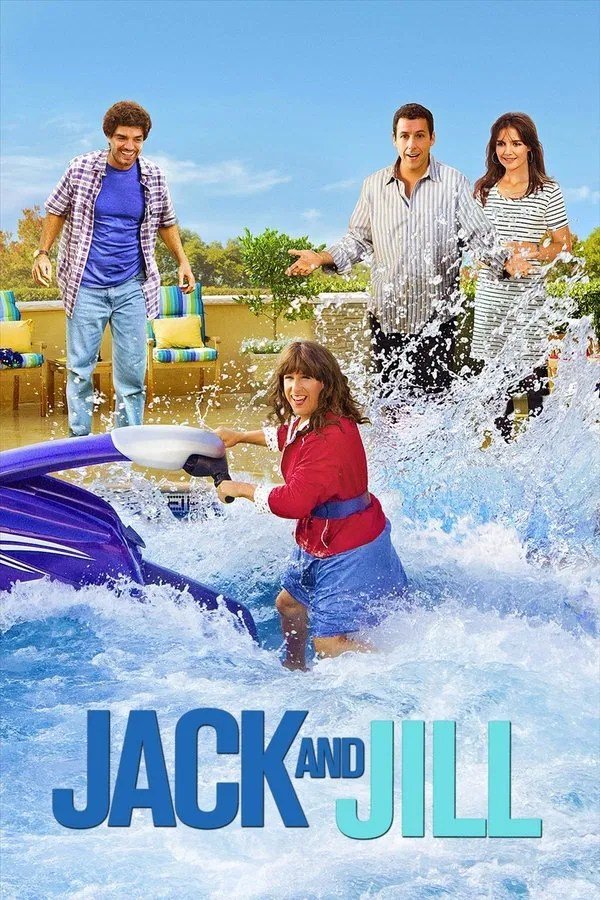
- The Adam Sandler Factor: Perhaps one of the most memorable (and critically panned) modern adaptations is the 2011 film Jack and Jill starring Adam Sandler playing both roles. While a comedic effort, it showcases how ingrained the names are in popular culture that a major motion picture could be built around the gender-swapping premise of the famous duo. This film, regardless of its reception, is a powerful example of the rhyme's cultural footprint.
- Darker Interpretations: In contrast to the comedic, some adaptations lean into the cautionary tale aspect or explore darker interpretations. Horror films might use the innocent rhyme as a prelude to something sinister, or reimagine Jack and Jill as more menacing figures, leveraging the contrast between their familiar innocence and a new, frightening context.
Music and Song: Beyond the Nursery Tune
While James William Elliott's 1870 melody is iconic, the influence of Jack and Jill extends into other musical genres.
- Pop Culture Samples: The rhyme's tune or lyrics might be sampled in contemporary songs, providing a nostalgic or ironic touch.
- Original Compositions: Musicians sometimes write original songs inspired by the themes of falling, resilience, or youthful love, directly referencing Jack and Jill in their lyrics. These often play on the universal symbolism of the names rather than strictly retelling the rhyme.
Games and Interactive Media: Playful Adventures
The interactive nature of games lends itself well to the simple quest of Jack and Jill.
- Children's Educational Games: Many early learning apps and video games feature Jack and Jill as characters, guiding children through puzzles or teaching basic concepts.
- Platformers and Adventure Games: The journey up a hill and the act of falling and recovering translate well into platformer game mechanics, where players might guide the duo through various levels, overcoming obstacles to reach their goal.
- Board Games and Puzzles: The imagery of Jack and Jill is often used in traditional games, puzzles, and toys, capitalizing on the instant recognition factor.
Advertising and Branding: Trust and Familiarity
Businesses often leverage the universally recognized names and narrative of Jack and Jill.
- Product Naming: Companies might name products "Jack and Jill" to evoke a sense of innocence, simplicity, or a complementary pairing (e.g., a "Jack and Jill" line of matching children's outfits).
- Marketing Campaigns: Advertisements might feature characters reminiscent of Jack and Jill to suggest a product is wholesome, family-friendly, or helps in overcoming small "tumbles" in life.
- Symbolism of Partnership: The names are often used to symbolize a partnership or duo, regardless of the product, simply because the association is so strong in the public consciousness.
Why They Endure: The Archetypal Power of Jack and Jill
The true genius of "Jack and Jill" lies in its profound simplicity and its capacity to embody universal human experiences. It speaks to something deep within us, which is why it continues to be reimagined and adapted.
- Representing Youth and Innocence: Jack and Jill are, first and foremost, children. They represent a period of life characterized by exploration, learning, and vulnerability. Their journey up the hill is a metaphor for any new endeavor undertaken with youthful zeal.
- Universal Themes of Struggle and Resilience: The core of the story is the fall and the subsequent recovery. This resonates with everyone. We all face challenges, experience setbacks, and must find ways to "mend our heads" and move forward. The rhyme quietly teaches perseverance and the reality that accidents happen.
- The Power of Partnership: While Jack falls first, Jill "comes tumbling after." This suggests a shared experience, a mutual journey. They are a pair, and their individual mishaps affect the other, subtly hinting at themes of companionship and shared fate.
- Memorability and Oral Tradition: The rhyme's simple structure (AABB rhyme, iambic meter) makes it incredibly easy to remember and recite. This inherent "stickiness" has ensured its survival through centuries of oral tradition, making it ripe for consistent popular culture references.
- Ambiguity as Strength: The lack of detailed character descriptions or an explicit moral allows for immense flexibility. Readers and audiences can project their own meanings onto Jack and Jill, making them endlessly relatable and adaptable to different contexts and messages.
Bringing Jack and Jill to Life: Your Own Creative Endeavors
Perhaps you're inspired to create your own "Jack and Jill" adaptation. How can you approach this beloved classic while making it fresh and engaging for a contemporary audience?
Tips for Adapting Classic Tales
- Identify the Core Essence: What is the fundamental message or feeling of the original rhyme you want to preserve? Is it innocence, resilience, the bond between two people, or the simple act of overcoming a challenge?
- Choose Your Angle: Will you retell the story faithfully? Subvert expectations with a dark or comedic twist? Use the names as an homage to a new, unrelated narrative?
- Consider Your Audience: Are you writing for young children, teens, or adults? This will dictate your tone, complexity, and thematic depth.
- Add Depth to the Characters: The original rhyme gives us very little about Jack and Jill. Who are they? What are their personalities? What motivates them beyond fetching water? Giving them internal lives can create a compelling adaptation.
- Expand the World: What does the hill look like? What dangers or wonders lie between their home and the well? Building out the setting can enrich the narrative.
- Find a Modern Resonance: How can the themes of "Jack and Jill" speak to contemporary issues or experiences? Perhaps their fall represents a modern-day social challenge, or their healing process symbolizes recovery from a different kind of injury.
Pitfalls to Avoid
- Losing the Core Essence: While adaptation allows for creativity, straying too far from the fundamental recognizability of "Jack and Jill" can make your work feel disconnected from its source material.
- Over-Complication: The original rhyme's strength is its simplicity. While adding depth is good, avoid making the story convoluted or losing its clear, accessible narrative arc.
- Being Preachy: If your adaptation aims to teach a lesson, weave it subtly into the narrative rather than delivering it explicitly. The best stories allow the audience to draw their own conclusions.
- Ignoring the "Crown": The phrase "broke his crown" is iconic. Whether you interpret it literally as a head injury or metaphorically, acknowledging its significance is key.
Your Burning Questions About Jack and Jill, Answered
The longevity of "Jack and Jill" means people often have lingering questions about its specifics. Here are some common inquiries:
Is "Jack and Jill" a true story?
While the rhyme isn't a direct historical account, the local legend in Kilmersdon, Somerset, attributes it to a real couple who suffered tragic fates. However, most folklorists agree that the rhyme itself likely evolved from older oral traditions of using "Jack and Jill" as generic names for a boy and a girl, and the Kilmersdon story is a compelling local narrative that grew around the pre-existing rhyme. So, while a specific couple might have inspired a local interpretation, the rhyme’s broad origins are more about generic archetypes.
What does "broke his crown" actually mean?
In the context of the nursery rhyme, "broke his crown" primarily refers to Jack suffering a head injury, likely a bump or a cut, on his head. "Crown" has historically been used to refer to the top of the head. However, as discussed in the King Charles I theory, some interpretations playfully (or seriously) suggest it could also refer to the king's crown of office or the value of a coin, particularly in allegorical readings.
Was Jill originally a boy?
Yes, in its earliest published form around 1765, the second character was named "Gill," which was commonly a boy's name. Over time, "Gill" was feminized to "Jill," creating the now familiar boy-and-girl pairing that is central to its cultural identity.
Why are Jack and Jill always together?
The names "Jack and Jill" have become a generic cultural shorthand for a boy and a girl, or youthful sweethearts. This pairing dates back to the 16th century in English usage, long before the rhyme was formally published. They represent an archetypal male-female duo, often embarking on a shared journey or experience, making their togetherness feel inherent and timeless.
The Next Hill to Climb: Engaging with Enduring Stories
From its humble origins in 18th-century England to its ubiquitous presence in modern media, "Jack and Jill" is far more than just a simple nursery rhyme. It's a foundational piece of Western culture, a resilient narrative that speaks to universal human experiences of ambition, struggle, and recovery. Its adaptability, layered interpretations, and archetypal characters ensure its continued relevance across generations.
The next time you hear "Jack and Jill," take a moment to appreciate the journey this simple story has taken. Consider its hidden depths, its historical echoes, and its countless faces in popular culture. What new adaptations might you discover, or even create, that continue to tell the timeless tale of two children who went up a hill to fetch a pail of water? The hill, it seems, will always be there, waiting for the next pair to climb.