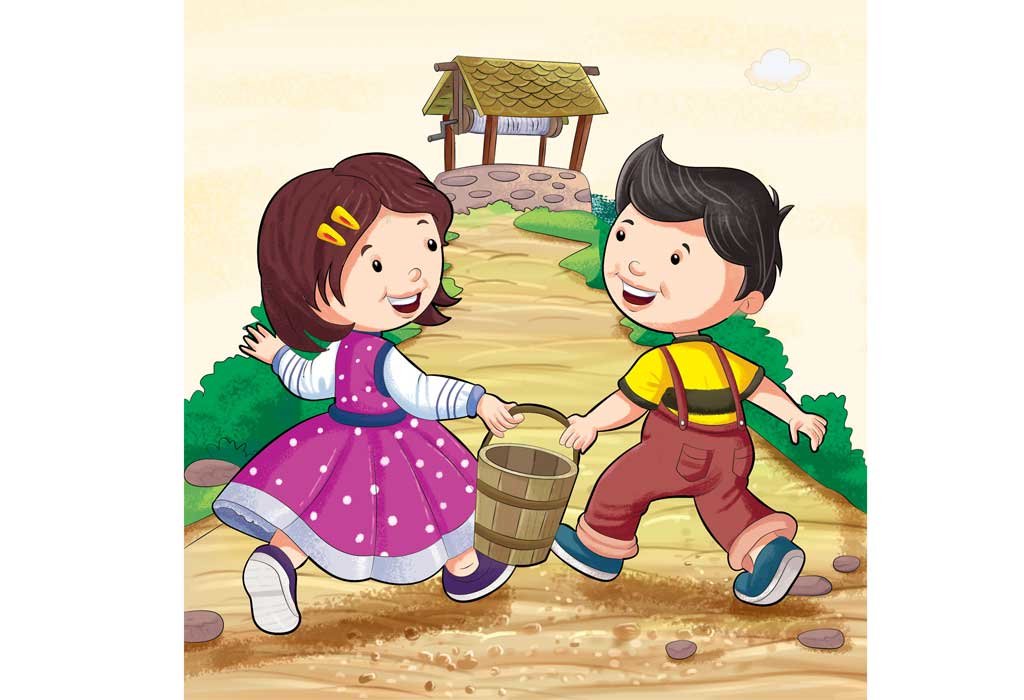
Nursery rhymes: they're the earliest poetry we learn, whispered from generation to generation, often without a second thought to their origins or deeper meanings. Yet, these seemingly simple verses hold a surprising amount of history, cultural resonance, and sometimes, even controversy. Today, we're diving deep into Comparing Jack and Jill to Other Classic Nursery Rhymes, exploring what makes this iconic duo's tumble down the hill so singularly enduring, and how it stacks up against its beloved peers.
From its deceptively simple narrative to the layers of historical and mythological interpretations it has accumulated, "Jack and Jill" offers a fascinating lens through which to view the very nature of children's literature. You might be surprised just how much complexity lies within those few short lines.
At a Glance: What Makes Jack and Jill Stand Out
- Ancient Roots: The names "Jack" and "Jill" were generic for a boy and girl in English literature centuries before the rhyme was recorded.
- Evolving Narrative: The original "Gill" was a boy, later feminized to "Jill," and different versions exist with varying outcomes for the characters.
- Debated Meanings: From a simple cautionary tale to theories about tax protests, Norse myths, and local legends, interpretations abound.
- Literary Craft: Despite its simplicity, the rhyme employs classic iambic rhythm and an AABB ballad structure, making it incredibly memorable.
- Cultural Shorthand: "Jack and Jill" has transcended the rhyme itself, becoming a universal symbol for a young boy and girl or youthful sweethearts.
- Narrative Arc: Unlike many simple observational rhymes, "Jack and Jill" presents a clear, albeit brief, story with a beginning, middle, and end.
The Enduring Echo of "Jack and Jill": Origins and Evolution
Long before Jack and Jill ascended that fateful hill, their names were already cemented in the English lexicon. Since the 16th century, "Jack" and "Jill" (or "Gill") served as generic terms for a boy and a girl, much like "Tom, Dick, and Harry" today. You'd find them popping up in Shakespeare's plays and various Elizabethan comedies, illustrating just how deeply embedded these archetypal figures were in the cultural consciousness. Even the proverb, "A good Jack makes a good Jill," highlights this long-standing, generic usage.
The rhyme itself, however, is a slightly more recent invention, first recorded in 1765. It found its way into print as "Jack and Gill" in John Newbery's Mother Goose's Melody, a pivotal collection for nursery rhymes. Interestingly, "Gill" in that initial publication referred to another boy, indicating a fluidity in character gender that would later settle. Over time, "Gill" was feminized to "Jill," solidifying the familiar boy-girl pairing we know today. This evolution isn't uncommon for oral traditions; stories and characters shift and adapt as they're passed down, reflecting changing societal norms and storytelling preferences.
The core narrative has remained remarkably consistent: two children, a hill, a pail of water, a fall, and a head injury. It's a tale that's simple enough for the youngest listener to grasp, yet robust enough to carry centuries of interpretation.
Two Paths Up the Hill: Examining Different Versions
One of the fascinating aspects of "Jack and Jill" is its multiplicity. While the opening lines are almost universally recognized, what happens after the initial tumble can vary significantly. These different versions aren't just minor alterations; they subtly shift the rhyme's thematic weight and potential lessons.
Consider the two most common iterations:
Version 1: The Resilient Return
This rendition emphasizes mutual support and perseverance. After Jack's injury and Jill's subsequent fall, he gets up, comforts her, and they resolve to finish their task. The rhyme concludes with them successfully bringing water home to a grateful mother.
Jack and Jill went up the hill
To fetch a pail of water.
Jack fell down and broke his crown,
And Jill came tumbling after.Then up got Jack and said to Jill,
As in his arms he took her,
“Brush off that dirt for you’re not hurt,
Let’s fetch that pail of water.”So Jack and Jill went up the hill
To fetch the pail of water,
And took it home to Mother dear,
Who thanked her son and daughter.
This version paints a picture of childhood resilience, teamwork, and ultimately, success in the face of adversity. It's a positive reinforcement of enduring through challenges.
Version 2: The Cautionary Tale with Consequences
This more somber version focuses on the immediate aftermath of the accident and introduces an element of punishment. Jack, injured, tends to his head with a folk remedy, and Jill's laughter at his plight leads to a reprimand.
Jack and Jill went up the hill,
to fetch a pail of water.
Jack fell down and broke his crown,
and Jill came tumbling after.Up Jack got and home did trot,
as fast as he could caper.
Went to bed and plastered his head,
with vinegar and brown paper.Then Jill came in and she did grin,
to see his paper plaster.
Her Mother, vexed, did whip her next,
for laughing at Jack’s disaster.
Here, the focus shifts to consequences: the pain of injury, the sting of a scolding, and the moral lesson against mocking someone's misfortune. This version leans into the "cautionary tale" aspect more explicitly, reminding children about empathy and appropriate behavior.
These distinct narratives highlight how a single set of characters and a core event can be molded to convey different messages. When we look at Comparing Jack and Jill to Other Classic Nursery Rhymes, this variability is a key feature. Many rhymes, like "Humpty Dumpty," are quite fixed in their narrative, while others, often those with longer oral traditions, can have multiple accepted endings or additional verses.
Beyond the Tumble: Unpacking "Jack and Jill's" Deeper Meanings
"Jack and Jill" is more than just a simple story of two children and a fall. Its brevity and memorable imagery have made it a canvas for numerous interpretations, some grounded in historical facts, others venturing into the realm of myth and folklore.
The Simple Cautionary Tale
At its most straightforward, "Jack and Jill" serves as a cautionary tale. It subtly warns children about the dangers of climbing hills, the risk of accidents, and the consequences of carelessness. It also touches on themes of mutual support (in Version 1) or the lack thereof (in Version 2), and the journey from misfortune to recovery. The universal experience of a minor childhood mishap makes it instantly relatable to young listeners.
Historical Echoes and Debunked Theories
Theories about the rhyme's hidden meanings are particularly captivating. While some are compelling, others have been definitively debunked.
- The British Tax Reform Theory: This is one of the more persistent and intriguing interpretations. Some scholars suggest the rhyme alludes to King Charles I's efforts to increase taxes by reducing the volume of a "jack" (a half-pint liquid measure) and a "gill" (a quarter-pint liquid measure). In this reading, "Jack lost his crown" could refer to the crown's volume (or value) being reduced, and "Gill came tumbling after" signifying the subsequent reduction in the gill measure and the public's resulting protest or dissatisfaction. It's a clever interpretation that gives the rhyme a political edge.
- Norse Mythology Connection: Another fascinating theory links "Jack and Jill" to the Norse myth of Hjuki and Bil. These two children were said to have been taken up by the moon god Mani while fetching water from a well. The imagery of children, water, and an ascent (up the hill/taken by the moon) draws a compelling parallel, suggesting deep mythological roots that might have influenced the rhyme's ancient themes.
- Local Legends: Many local areas lay claim to inspiring the rhyme. For instance, the village of Kilmersdon in Somerset, England, boasts a well and a plaque commemorating Jack and Jill, claiming them as local figures whose unfortunate accident inspired the verses. Such localizations are common for popular folklore, anchoring universal tales in specific places.
- The Debunked French Revolution Theory: A popular, yet incorrect, theory connects "Jack and Jill" to King Louis XVI (Jack) and Queen Marie Antoinette (Jill) of France, implying their "fall" (decapitation) during the French Revolution. However, historical research confirms that the "Jack and Jill" rhyme was recorded and published decades before the French Revolution, firmly debunking this intriguing but inaccurate claim. It's a powerful reminder that not all compelling theories stand up to historical scrutiny.
Understanding the Language: "Broke His Crown" and "Vinegar and Brown Paper"
To fully appreciate the rhyme, it's helpful to understand some period-specific language and practices:
- "Broke his crown": This isn't about royalty losing a physical crown. In this context, "crown" refers to the top of the head. So, "broke his crown" simply means Jack suffered a head injury, likely a bump, cut, or bruise.
- "Vinegar and brown paper": For modern readers, this might sound like a strange first aid kit. However, in earlier times, a compress of vinegar-soaked brown paper was a common folk medicine remedy. It was believed to help reduce swelling and pain from bruises, sprains, and minor head injuries. This detail grounds the rhyme in the practical realities of historical home remedies.
The layers of interpretation and the need to understand historical context make "Jack and Jill" a richer text than its surface suggests. This depth, coupled with its simple delivery, is a hallmark of many enduring nursery rhymes. If you're keen to delve deeper into these stories, you might want to Explore Jack Plus Jill for a more comprehensive dive into their cultural impact.
The Anatomy of a Classic: What Makes "Jack and Jill" Tick
What gives "Jack and Jill" its remarkable staying power, allowing it to resonate across centuries and cultures? It's a combination of linguistic artistry, universal themes, and its capacity to embed itself in the cultural fabric.
Rhyme and Rhythm: The Catchy Beat
Like many classic nursery rhymes, "Jack and Jill" is a masterclass in accessible poetry. It typically employs an iambic rhythm, meaning it has an alternating pattern of unstressed and stressed syllables, creating a natural, flowing cadence. Think of it: Jack and Jill went up the hill. This consistent beat makes it easy to remember, recite, and even sing.
The rhyme scheme is usually a simple AABB, characteristic of ballads and folk songs. This predictable pattern further aids memorization and makes the rhyme feel complete and satisfying. This foundational structure—a clear rhythm and simple rhyme—is shared by virtually all successful nursery rhymes, from "Twinkle, Twinkle Little Star" to "Mary Had a Little Lamb," making them ideal for language acquisition and early literacy.
Universal Themes: Accidents, Friendship, and Perseverance
"Jack and Jill" taps into universally understood human experiences:
- Accidents and Consequences: Children (and adults) sometimes fall. Things break. There are repercussions.
- The Mundane Task: Fetching water was a common chore, making the initial premise relatable.
- Friendship and Support: In some versions, it highlights companionship and mutual aid.
- Resilience and Recovery: Despite the fall, there's an effort to get back up and carry on.
These themes are not tied to a specific time or place, ensuring the rhyme's relevance across generations.
Memorable Characters: Generic Yet Relatable
Jack and Jill are, by design, generic. They are "a boy and a girl," not specific individuals with elaborate backstories. This allows children listening to easily imagine themselves in their shoes, or to project their own experiences onto the characters. This universality is a powerful tool in storytelling, making the characters accessible and enduring. They aren't constrained by overly specific details, allowing them to remain evergreen.
Cultural Footprint: From Rhyme to Idiom
The story of Jack and Jill has transcended the nursery rhyme itself, becoming a recognized cultural shorthand. They are often used as generic names for a young boy and girl, or even as a symbol for youthful sweethearts embarking on an adventure or facing a challenge together. This enduring metaphorical use is a testament to the rhyme's deep penetration into the collective consciousness, something achieved by only the most iconic cultural artifacts. It has inspired countless adaptations, parodies, and references in popular culture, from literature to film and television.
Comparing Jack and Jill to Its Nursery Rhyme Peers
When we engage in Comparing Jack and Jill to Other Classic Nursery Rhymes, several distinctions and commonalities emerge. While all classic rhymes share elements like rhythm, simple language, and memorability, "Jack and Jill" offers some unique qualities.
Simplicity and Repetition: Common Ground
Like "Row, Row, Row Your Boat" or "Baa, Baa, Black Sheep," "Jack and Jill" benefits from its straightforward language and repetitive structure. This makes it easy for young children to grasp, follow, and eventually recite. The consistent rhythm and rhyme scheme are shared by virtually all popular nursery rhymes, forming the bedrock of their appeal to nascent minds. They teach language patterns, phonetics, and early storytelling without feeling like a lesson.
Narrative Arc vs. Simple Observation
Here's where "Jack and Jill" often distinguishes itself. Many nursery rhymes are observational or depict a single static image:
- "Twinkle, Twinkle Little Star" describes a star.
- "Mary Had a Little Lamb" describes a girl and her pet.
- "Little Bo-Peep" describes a shepherdess who lost her sheep.
While these have elements of narrative, "Jack and Jill" presents a much clearer, dynamic mini-story with a sequence of events: a goal (fetching water), an action (going up the hill), a conflict (the fall), and a resolution (the aftermath, varying by version). This clear narrative progression, complete with character motivation and consequence, gives it a richness that some simpler, more descriptive rhymes lack. It's a tiny drama unfolding.
Ambiguity and Interpretation: A Unique Depth
Perhaps the most significant differentiator for "Jack and Jill" lies in its ambiguity and the depth of its potential interpretations. While "Humpty Dumpty" is a clear-cut tale of a fall and an inability to be repaired, and "Old Mother Hubbard" tells a simple story of an empty cupboard, "Jack and Jill" offers multiple layers:
- Is it merely a tale of an accident?
- A lesson in resilience?
- A commentary on historical tax policy?
- An echo of ancient myths?
This multi-faceted interpretive potential makes "Jack and Jill" a subject of ongoing discussion and scholarly interest, something less common for more explicit or purely descriptive rhymes. This depth allows it to engage both children on a surface level and adults on a more analytical one, granting it a unique intellectual longevity.
Enduring Adaptability: Cultural "Stickiness"
Finally, "Jack and Jill" possesses an exceptional degree of cultural "stickiness." It's not just remembered; it's used. The names "Jack and Jill" have become almost proverbial, standing in for any generic young couple or companions. This level of integration into common parlance is a mark of truly iconic cultural output, surpassing many other classic rhymes that remain primarily within the realm of children's literature. It shows how the rhyme has jumped beyond its original context to permeate broader culture.
Why Some Rhymes Last: Lessons from Jack and Jill's Longevity
The enduring popularity of "Jack and Jill" isn't an accident. It offers valuable insights into what makes certain stories, songs, and verses resonate for centuries.
- The Power of Simple Storytelling: At its heart, "Jack and Jill" is a compelling, easy-to-follow narrative. It has a clear premise, a dramatic event, and a resolution. This universal story structure is incredibly powerful, even in miniature form.
- The Appeal of Relatable Human Experiences: Everyone understands falling, getting hurt, and needing to fetch something. The core experiences in the rhyme are fundamentally human, allowing broad identification.
- The Flexibility for Interpretation: The multiple layers of meaning, whether intentional or acquired over time, allow the rhyme to remain fresh and relevant. It provides enough ambiguity for adults to ponder, without confusing children.
- The Catchy Rhythm and Sound: The masterful use of iambic meter and simple AABB rhyme makes it a joy to hear and recite. This sonic appeal is crucial for memorization and passing the rhyme down orally.
These elements combine to create a piece of cultural heritage that is both deeply familiar and surprisingly profound, a testament to the simple yet powerful artistry of the nursery rhyme tradition.
Navigating the Lore: Common Questions About Nursery Rhymes
The rich history and varied interpretations of rhymes like "Jack and Jill" often lead to common questions.
Why are nursery rhymes so old?
Many popular nursery rhymes have oral roots dating back centuries, often predating their first written publication by generations. They served as a form of entertainment, education, and cultural transmission in times before widespread literacy. Their memorable structure and simple language made them ideal for passing down traditions, moral lessons, and even historical tidbits through word of mouth.
Do they all have secret meanings?
Not all nursery rhymes harbor hidden historical or political meanings. While "Jack and Jill" and some others are speculated to have deeper allegorical roots, many are simply playful verses, counting rhymes, lullabies, or straightforward observations of daily life. The idea that every rhyme has a dark or secret meaning is a common misconception, often fueled by fascination with folklore and urban legends. It's more accurate to say some can be interpreted on multiple levels, while others are simply what they appear to be.
How do we know which theories are credible?
Distinguishing between credible theories and speculative ones requires careful historical and linguistic research. Academics examine:
- Dating: Does the alleged historical event truly predate the rhyme's earliest known recording? (This debunked the French Revolution link for "Jack and Jill").
- Linguistic Evidence: Do the words used in the rhyme genuinely align with the proposed historical context or meanings? (e.g., "crown" meaning head, "jacks and gills" as measures).
- Cultural Context: Was the proposed meaning a common theme or concern in the era the rhyme emerged?
- Scholarly Consensus: Do multiple independent researchers come to similar conclusions based on evidence?
While some theories remain intriguing possibilities, others are supported by strong evidence, and some are clearly disproven. It's about weighing the evidence, not just the appeal of the story.
Your Turn: Reconnecting with the Classics
From its mysterious origins to its multifaceted interpretations, "Jack and Jill" stands as a testament to the enduring power of classic nursery rhymes. It's a simple story on the surface, yet one that rewards deeper exploration, revealing layers of history, cultural meaning, and the universal human experience of triumph and tumble.
So the next time you hear those familiar lines, consider the journey Jack and Jill have taken not just up and down the hill, but through centuries of oral tradition and cultural significance. These rhymes are more than just children's ditties; they are echoes of our past, embedded with stories waiting to be rediscovered. Take a moment to read them again, not just with a child's ear, but with an adult's curiosity. You might be surprised at what hidden treasures you find.